4,10

1093 in stock

1093 in stock

Add to Wishlist
Add to Wishlist

Share

Information Note
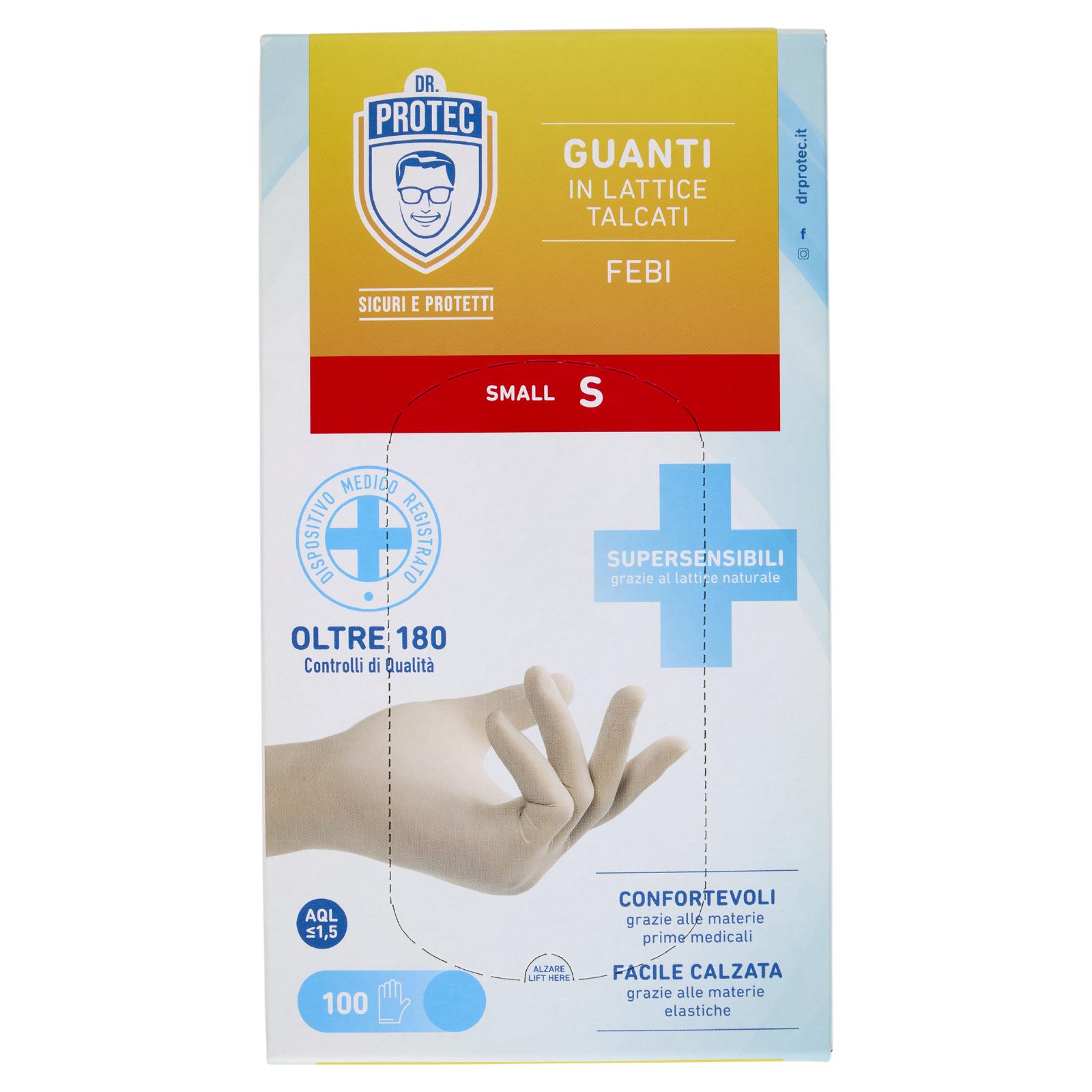
Non-sterile disposable gloves made of natural rubber latex. Powdered, internally lubricated with bio-absorbable corn starch, natural white color, ambidextrous, tear-resistant cuff, and smooth surface.

Main Features:
Registered medical device
Over 180 Quality Controls
Super sensitive – thanks to natural latex
AQL ≤1.5
Comfortable – thanks to medical-grade raw materials
Easy fit – thanks to elastic materials

Preparation and Use
Recommended uses: indicated in medical, professional, cleaning, and hygiene contexts at home. Suitable for food handling.
Usage instructions: the glove must be worn before starting the operational activity. The choice of glove should be made knowing the work activity and the processing process performed by the operator, considering the working conditions and associated risks. Disposable glove to be used in chemically and mechanically non-aggressive activities. Before use, inspect the gloves for any defects or imperfections such as holes or tears. If any defects are found, immediately replace the damaged glove. Always perform a preliminary test under actual conditions of use. Use the gloves with dry, clean hands and without rings. To facilitate the fitting of the glove, hold the cuff with the other hand, avoiding excessive pulling that could cause the glove to tear. As these are disposable devices, frequent replacement is recommended to maintain the optimal level of protection; in any case, the usage time should not exceed the limits indicated for the different categories of chemical products. Do not use gloves in contact with the tested chemical product for periods exceeding those related to the performance level (0 10 min.; 2> 30 min.; 3 > 60 min.; 4 > 120 min.; 5 > 240 min.; 6 > 480 min.). Keep the packaging for further information and ensure traceability. The product does not require safety data sheets.

Disposal instructions: At the end of use for disposal, it is recommended to remove the glove by turning it inside out to minimize the risk of microbial contamination, proceeding to disposal in accordance with current regulations for the material with which it is made.

Rev. Bh2022.01 / May 2022

Other Info:
Intended use: Personal protective equipment of Category III under EU Regulation 2016/425.
Medical Device Class I, for temporary use in relation to body orifices, under rule 5 of Annex VIII of EU Regulation 2017/745.

Regulatory standards:
– Absence of holes for AQL ≤ 1.5 (Inspection Level G-1) in accordance with EN 455-1:2020 standards.
– UNI EN 455-2:2015 (Requirements and tests for physical properties).
– UNI EN 455-3:2015 (Requirements and tests for biological evaluation).
– Shelf life calculated according to UNI EN 455-4:2009.
– UNI EN ISO 10993-10:2013 (Skin irritation and sensitization tests).
– Viral penetration test with bacteriophage Phi-X174 in accordance with ASTM F1671/F1671M-13 standards.
– ASTMD 3578 (test methods for performance and safety of medical gloves).
– EN ISO 374-1:2016+A1:2018 (Terminology and performance requirements for chemical risks).
– EN 374-2:2014 (Resistance to penetration).
– EN 374-4:2013 (Determination of resistance to degradation by chemicals).
– EN ISO 374-5:2016 (Protection from microorganisms).
– EN 16523-1:2015+A1:2018 (Resistance to permeation of chemical products).
– Compliance with EN 420:2003+A1:2009 standards (General requirements and test methods).
– Sampling plan in accordance with UNI ISO 2859:2007.
– Production in UNI EN ISO 9001:2015 and UNI EN ISO 13485:2016 certified facilities.

Permeation and degradation levels:
Chemical substance – Level
Sodium Hydroxide 40% (K) – 3 | 44.2%
Chloramine 10% – 4
Jodopovidone 10% – 3
Peracetic Acid 5% – 2
Formic Aldehyde 4% – 4
Glutaraldehyde 5% – 2
Sekumatic FRE – 4
Benzalkonium Chloride – 5
Chlorhexidine “S” – 3
Methanol – 1
Isopropyl Alcohol 30% – 2
Butyl Glycol – 1
Butyldiglycol – 1
Hydrochloric Acid 15% – 3
Citric Acid 10% – 2
Phosphoric Acid 40% – 2
Potassium Hydroxide – 2
EDTA 40% – 1

Permeation class legend:
Level 1: Passage time > 10 min.
Level 2: Passage time > 30 min.
Level 3: Passage time > 60 min.
Level 4: Passage time > 120 min.
Level 5: Passage time > 240 min.
Level 6: Passage time > 480 min.

PPE certified by: A.N.C.I. Services Section C.I.M.A.C. Via Aguzzafame, 60/B 27029 Vigevano (PV) Italy

K – EN ISO 374-1:2016 Type C
Virus – EN ISO 374-5:2016

Safety Warnings:
WARNINGS
Suitability for food contact – tested for 2 hours at 40°C. Material suitable for contact with aqueous products pH>4.5 (simulating distilled water), alcoholic (simulating ethanol at 15%) and oily and/or fatty foods (simulating oil) for a maximum time of 30 minutes at 40°C. Material not suitable for contact with acidic or aqueous foods with pH<4.5 (simulating acetic acid 3%).
The glove contains natural rubber latex which may cause allergic and anaphylactic reactions in sensitive individuals. Avoid direct exposure to sunlight, ozone, and heat sources.
Disposable only, non-reusable device to avoid the onset of cross-contamination. Do not ingest. Keep out of reach of children and animals. The material may contain traces of chemical processing residues that, although not detectable by laboratory tests, may prove potentially dangerous in hypersensitive individuals. Use on hands with long or unkempt nails and rings may cause tearing of the device. In case of confirmed hypersensitivity, request the Technical Data Sheet from the manufacturer. This information does not reflect the actual duration of protection in the workplace and the differentiation between mixtures and pure chemicals. Resistance against chemicals has been evaluated under laboratory conditions from samples taken only from the palm (except in cases where the glove is of equal length or greater than 400 mm, in which case the cuff is also tested) and is only related to the chemical product tested. Resistance may differ if the chemical product is used in a mixture. It is recommended to verify that the gloves are suitable for the intended use as conditions in the workplace may differ from the type test depending on temperature, abrasion, and degradation. During use, protective gloves may provide less resistance to hazardous chemicals due to changes in physical properties. Movements, friction, as well as deterioration caused by chemical contact, etc., can significantly reduce the effective usage time. For corrosive chemicals, degradation may be the most important factor to consider when selecting chemical-resistant gloves. In case of serious incidents during the use of the device, the user should promptly report to the manufacturer and the competent authorities.

Avoid contact with Ozone

you might also like

Reviews

There are no reviews yet.

Only logged in customers who have purchased this product may leave a review.

Stay connected
on board

Subscribe to the newsletter for exclusive offers
and on-board news

Dr. Protec Powdered Latex Gloves Febi Small S 100 pcs

 4,10

1093 in stock

Information Note
Non-sterile disposable gloves made of natural rubber latex. Powdered, internally lubricated with bio-absorbable corn starch, natural white color, ambidextrous, tear-resistant cuff, and smooth surface.

Main Features:
Registered medical device
Over 180 Quality Controls
Super sensitive – thanks to natural latex
AQL ≤1.5
Comfortable – thanks to medical-grade raw materials
Easy fit – thanks to elastic materials

Preparation and Use
Recommended uses: indicated in medical, professional, cleaning, and hygiene contexts at home. Suitable for food handling.
Usage instructions: the glove must be worn before starting the operational activity. The choice of glove should be made knowing the work activity and the processing process performed by the operator, considering the working conditions and associated risks. Disposable glove to be used in chemically and mechanically non-aggressive activities. Before use, inspect the gloves for any defects or imperfections such as holes or tears. If any defects are found, immediately replace the damaged glove. Always perform a preliminary test under actual conditions of use. Use the gloves with dry, clean hands and without rings. To facilitate the fitting of the glove, hold the cuff with the other hand, avoiding excessive pulling that could cause the glove to tear. As these are disposable devices, frequent replacement is recommended to maintain the optimal level of protection; in any case, the usage time should not exceed the limits indicated for the different categories of chemical products. Do not use gloves in contact with the tested chemical product for periods exceeding those related to the performance level (0 10 min.; 2> 30 min.; 3 > 60 min.; 4 > 120 min.; 5 > 240 min.; 6 > 480 min.). Keep the packaging for further information and ensure traceability. The product does not require safety data sheets.

Disposal instructions: At the end of use for disposal, it is recommended to remove the glove by turning it inside out to minimize the risk of microbial contamination, proceeding to disposal in accordance with current regulations for the material with which it is made.

Rev. Bh2022.01 / May 2022

Other Info:
Intended use: Personal protective equipment of Category III under EU Regulation 2016/425.
Medical Device Class I, for temporary use in relation to body orifices, under rule 5 of Annex VIII of EU Regulation 2017/745.

Regulatory standards:
– Absence of holes for AQL ≤ 1.5 (Inspection Level G-1) in accordance with EN 455-1:2020 standards.
– UNI EN 455-2:2015 (Requirements and tests for physical properties).
– UNI EN 455-3:2015 (Requirements and tests for biological evaluation).
– Shelf life calculated according to UNI EN 455-4:2009.
– UNI EN ISO 10993-10:2013 (Skin irritation and sensitization tests).
– Viral penetration test with bacteriophage Phi-X174 in accordance with ASTM F1671/F1671M-13 standards.
– ASTMD 3578 (test methods for performance and safety of medical gloves).
– EN ISO 374-1:2016+A1:2018 (Terminology and performance requirements for chemical risks).
– EN 374-2:2014 (Resistance to penetration).
– EN 374-4:2013 (Determination of resistance to degradation by chemicals).
– EN ISO 374-5:2016 (Protection from microorganisms).
– EN 16523-1:2015+A1:2018 (Resistance to permeation of chemical products).
– Compliance with EN 420:2003+A1:2009 standards (General requirements and test methods).
– Sampling plan in accordance with UNI ISO 2859:2007.
– Production in UNI EN ISO 9001:2015 and UNI EN ISO 13485:2016 certified facilities.

Permeation and degradation levels:
Chemical substance – Level
Sodium Hydroxide 40% (K) – 3 | 44.2%
Chloramine 10% – 4
Jodopovidone 10% – 3
Peracetic Acid 5% – 2
Formic Aldehyde 4% – 4
Glutaraldehyde 5% – 2
Sekumatic FRE – 4
Benzalkonium Chloride – 5
Chlorhexidine “S” – 3
Methanol – 1
Isopropyl Alcohol 30% – 2
Butyl Glycol – 1
Butyldiglycol – 1
Hydrochloric Acid 15% – 3
Citric Acid 10% – 2
Phosphoric Acid 40% – 2
Potassium Hydroxide – 2
EDTA 40% – 1

Permeation class legend:
Level 1: Passage time > 10 min.
Level 2: Passage time > 30 min.
Level 3: Passage time > 60 min.
Level 4: Passage time > 120 min.
Level 5: Passage time > 240 min.
Level 6: Passage time > 480 min.

PPE certified by: A.N.C.I. Services Section C.I.M.A.C. Via Aguzzafame, 60/B 27029 Vigevano (PV) Italy

K – EN ISO 374-1:2016 Type C
Virus – EN ISO 374-5:2016

Safety Warnings:
WARNINGS
Suitability for food contact – tested for 2 hours at 40°C. Material suitable for contact with aqueous products pH>4.5 (simulating distilled water), alcoholic (simulating ethanol at 15%) and oily and/or fatty foods (simulating oil) for a maximum time of 30 minutes at 40°C. Material not suitable for contact with acidic or aqueous foods with pH<4.5 (simulating acetic acid 3%).
The glove contains natural rubber latex which may cause allergic and anaphylactic reactions in sensitive individuals. Avoid direct exposure to sunlight, ozone, and heat sources.
Disposable only, non-reusable device to avoid the onset of cross-contamination. Do not ingest. Keep out of reach of children and animals. The material may contain traces of chemical processing residues that, although not detectable by laboratory tests, may prove potentially dangerous in hypersensitive individuals. Use on hands with long or unkempt nails and rings may cause tearing of the device. In case of confirmed hypersensitivity, request the Technical Data Sheet from the manufacturer. This information does not reflect the actual duration of protection in the workplace and the differentiation between mixtures and pure chemicals. Resistance against chemicals has been evaluated under laboratory conditions from samples taken only from the palm (except in cases where the glove is of equal length or greater than 400 mm, in which case the cuff is also tested) and is only related to the chemical product tested. Resistance may differ if the chemical product is used in a mixture. It is recommended to verify that the gloves are suitable for the intended use as conditions in the workplace may differ from the type test depending on temperature, abrasion, and degradation. During use, protective gloves may provide less resistance to hazardous chemicals due to changes in physical properties. Movements, friction, as well as deterioration caused by chemical contact, etc., can significantly reduce the effective usage time. For corrosive chemicals, degradation may be the most important factor to consider when selecting chemical-resistant gloves. In case of serious incidents during the use of the device, the user should promptly report to the manufacturer and the competent authorities.

Avoid contact with Ozone
Add to Wishlist
Add to Wishlist

Share
you might also like

Reviews

There are no reviews yet.

Only logged in customers who have purchased this product may leave a review.

You need to be logged in to use the wishlist ❤️